


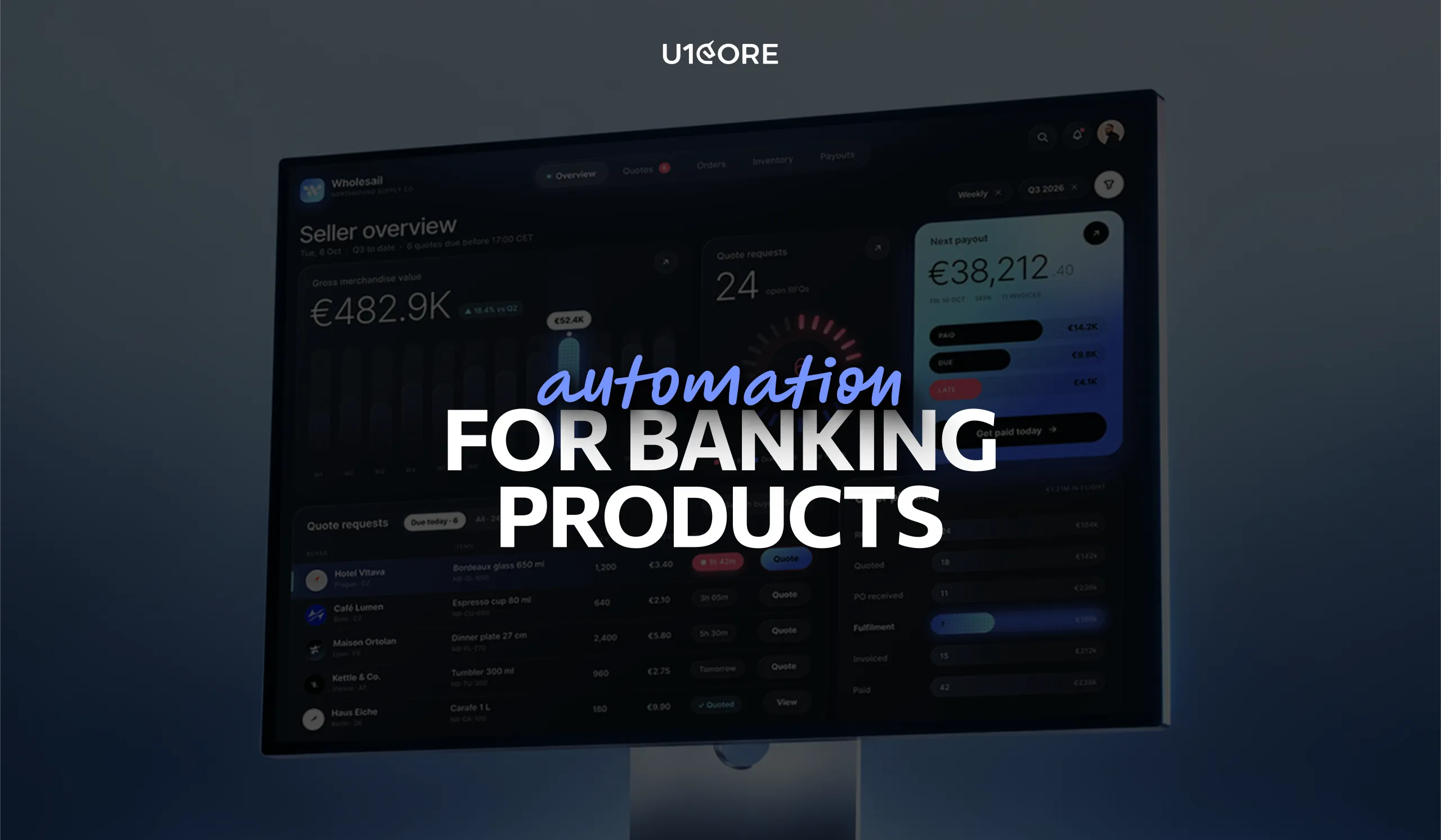
Growing banking products hit the same wall: AML screening in spreadsheets, KYC reviews piling up in inboxes, no clean audit trail — and users facing unexplained holds that erode trust.
This guide covers what compliance automation involves and which agencies can design and build it. At U1CORE, we develop this through our Banking & Compliance Automation service — so we'll show how we approach it.
Why compliance automation is hard to get right in banking products
Compliance logic is spread across too many systems. Screening, identity verification, monitoring and risk scoring come from different vendors. Without a connecting layer, analysts become the integration, and every hand-off invites errors.
Rules change faster than the product. Thresholds and review policies shift with regulation and markets. If every change needs a release, compliance teams work around the software.
Trust is decided in small moments. Users rarely read your licence page. They judge trust by how the product behaves when it asks for a document, pauses a payment or rejects a transfer. A correct check communicated badly still feels like a failure.
Typical failure points we see in banking compliance setups:
- Manual case handling — alerts land in email or spreadsheets, with no ownership, status or SLA tracking.
- No single customer view — analysts switch between screening, KYC and transaction tools to make one decision.
- Weak audit trails — decisions are made, but the reasoning, evidence and reviewer are not recorded in a way auditors accept.
- Opaque user messaging — holds and rejections appear without explanation, which drives support tickets and churn.
What a compliance-focused agency actually fixes
It maps the real workflow before designing screens. A good partner learns how analysts triage, escalate and close alerts, then designs around those decisions rather than a generic admin template.
It builds an orchestration layer, not another silo. Screening results, KYC status, transaction alerts and customer data meet in one place, so automated checks run in the background and only genuine exceptions reach a human.
It makes rules configurable. Risk thresholds, review queues and escalation paths should be editable by authorised compliance staff, with every change versioned and logged.
It designs case management for speed and accuracy. Clear queues, assignment, evidence attachments, decision reasons and four-eyes approval where required, so analysts close a case without leaving the screen.
It treats the audit trail as a product feature. Every decision is recorded with timestamp, actor, inputs and outcome, and can be exported for internal audit or regulators.
It turns compliance into trust-building UX. Users see why a document is needed, what happens next and how long it takes. Holds and declines come with plain-language reasons and a route to resolve them.
How to choose an agency for compliance automation
Look for design and engineering under one roof. Compliance tools fail when designers hand over screens developers cannot connect to real data, or developers build pipelines nobody can operate.
Ask how they handle internal tools, not just customer apps. Ask to see dashboards, admin panels and case management work, not only consumer interfaces.
Check their understanding of regulated environments. They should speak confidently about KYC, AML, data retention, access control and audit requirements, and know when to involve your legal team.
Confirm they can integrate with your vendors. Ask about verification, screening and core banking APIs, and handling vendor changes.

Top 7 agencies for banking compliance automation design and development
1. U1CORE
Best for: Established banking and fintech businesses that need compliance automation designed and built by one team, with UX that makes users trust the product.
U1CORE is the partner in crime for strong businesses whose digital and operations don't yet play at their level. One team handles strategy, design and development, so the compliance engine, ops dashboards and customer experience ship together. Platforms we have built have processed more than $1B, and our work in financial products includes Crypto Card, a crypto and fiat mobile banking app. Clients have left 52 reviews on Clutch, 103 on Upwork, 37 on GoodFirms and 31 on DesignRush.
What U1CORE does on compliance automation projects:
- Product strategy — mapping current compliance workflows, identifying the highest-volume manual checks and scoping what to automate first.
- UX audit — reviewing existing onboarding, verification and back-office flows to find drop-off points and analyst bottlenecks.
- Ops dashboard and case management design — queues, assignment, evidence views, decision logging and workload reporting for compliance teams.
- Custom software development — orchestration of KYC, AML screening and transaction monitoring vendors, configurable rules and full audit trails.
- Trust-building customer UX — clear verification steps, plain-language holds and declines, and status updates that reduce support load.
Why teams choose U1CORE: compliance tooling ships as a working product, not disconnected screens.

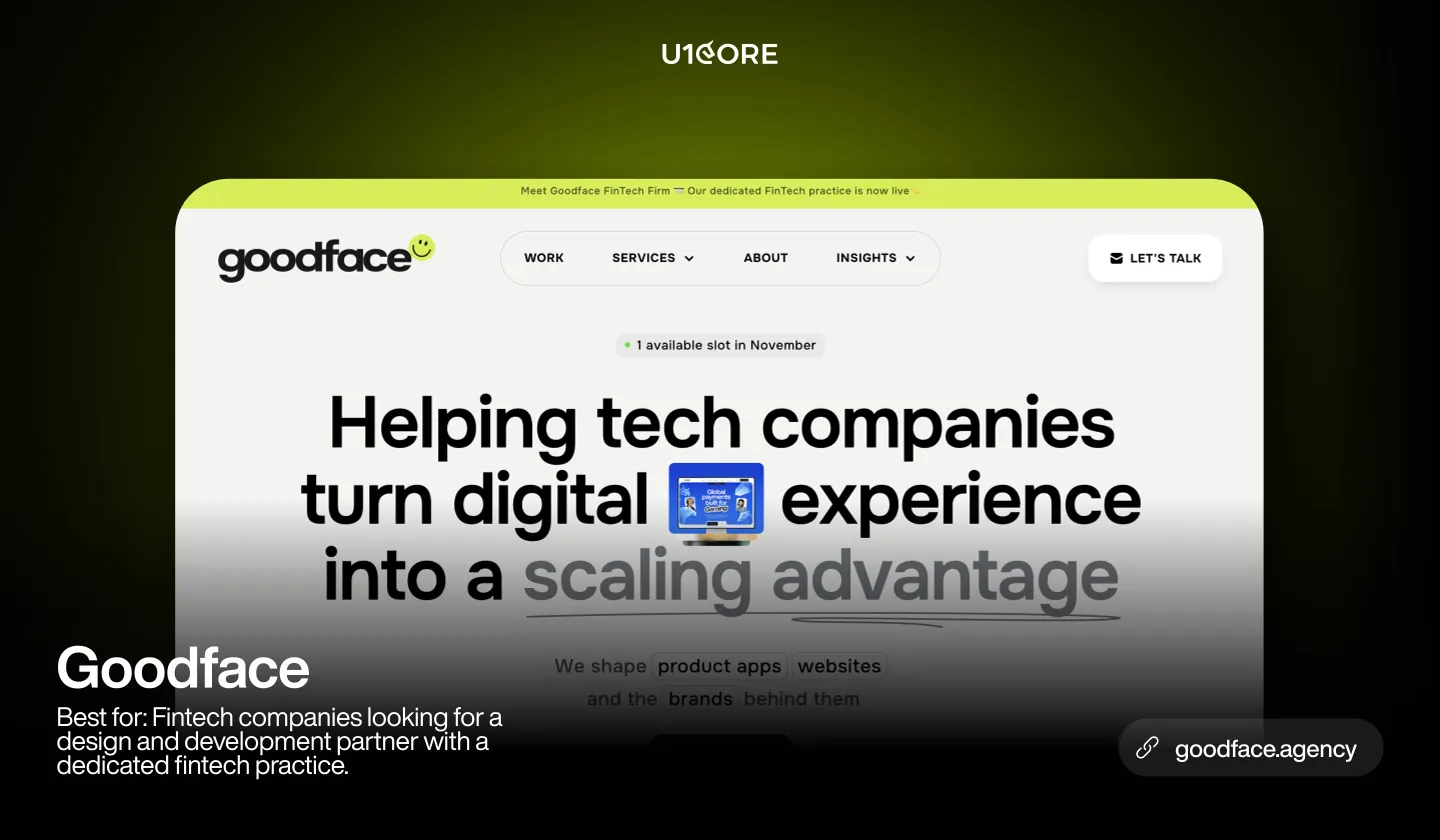
2. Goodface
Best for: Fintech companies looking for a design and development partner with a dedicated fintech practice.
Goodface, with offices in the UK, New York and Tallinn, works on fintech UX/UI and development, including KYC/AML tooling.
3. Flatstudio
Best for: Regulated financial products where compliance UX and transaction flows are the main concern.
Flatstudio is a Portugal- and Ukraine-based studio focused on trading platforms, neobanks and payment products.

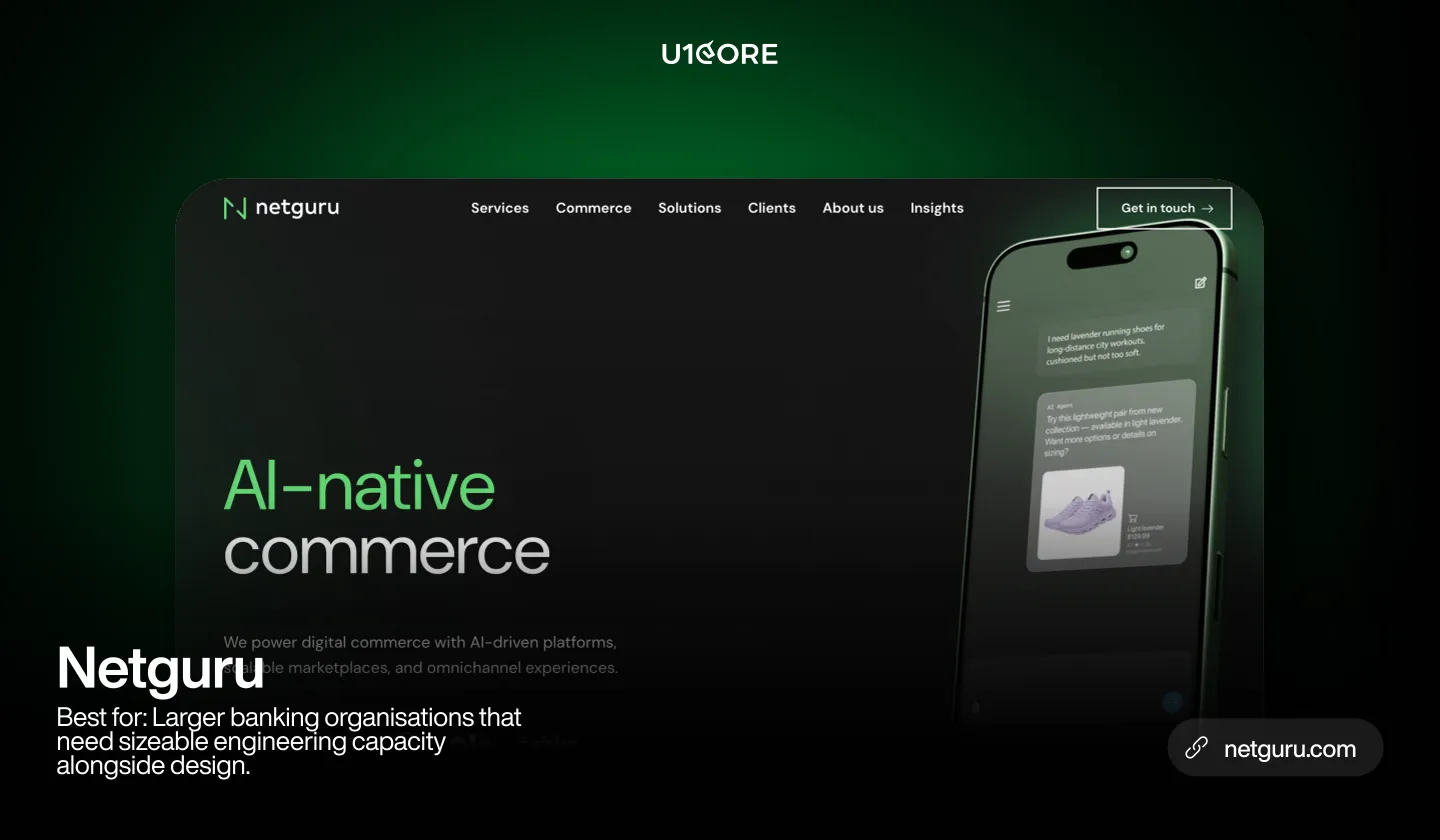
4. Netguru
Best for: Larger banking organisations that need sizeable engineering capacity alongside design.
Netguru is a Poland-based software consultancy with a long track record in fintech and banking.
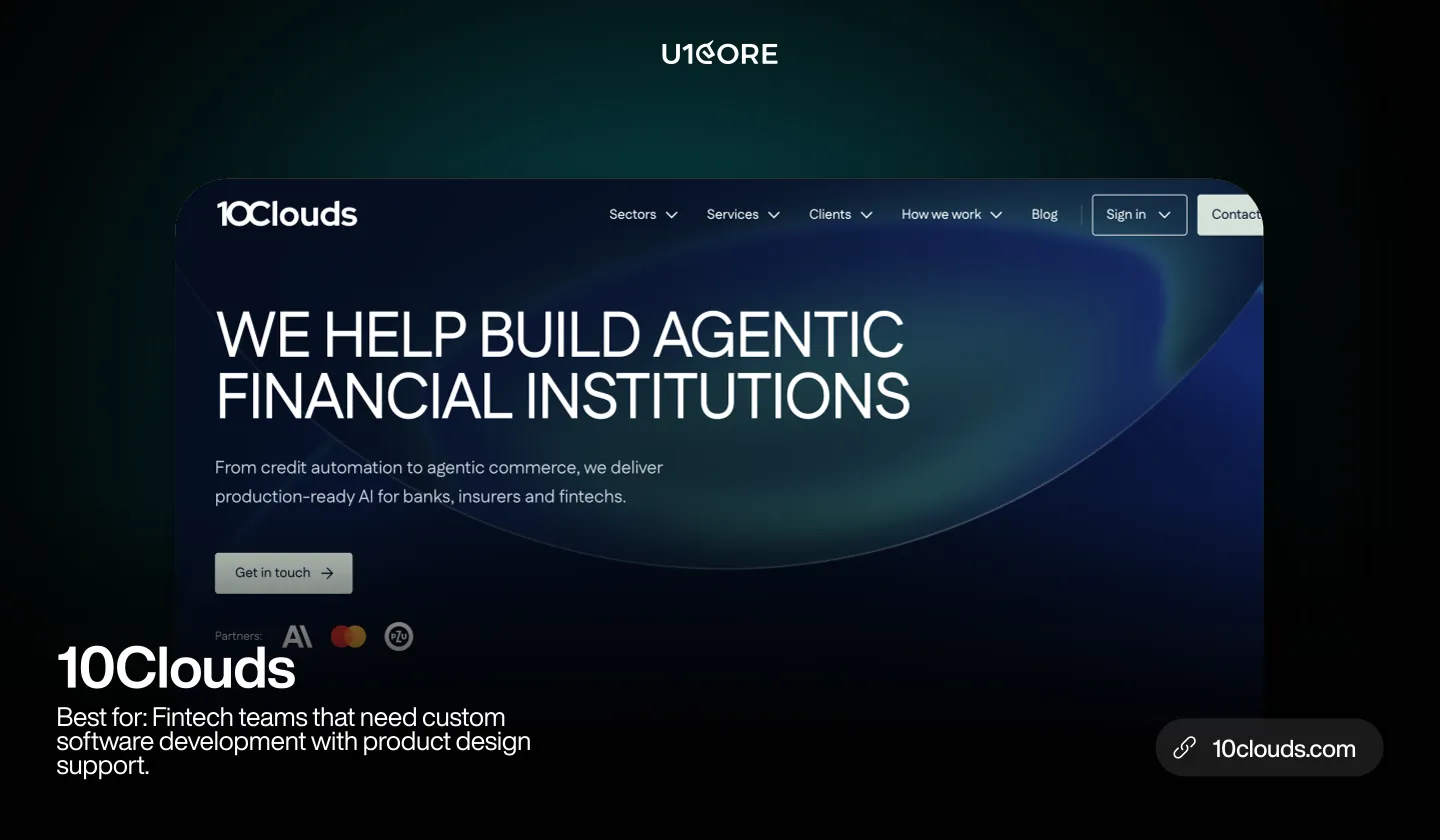
5. 10Clouds
Best for: Fintech teams that need custom software development with product design support.
10Clouds is a Warsaw-based software house known for fintech and blockchain development.
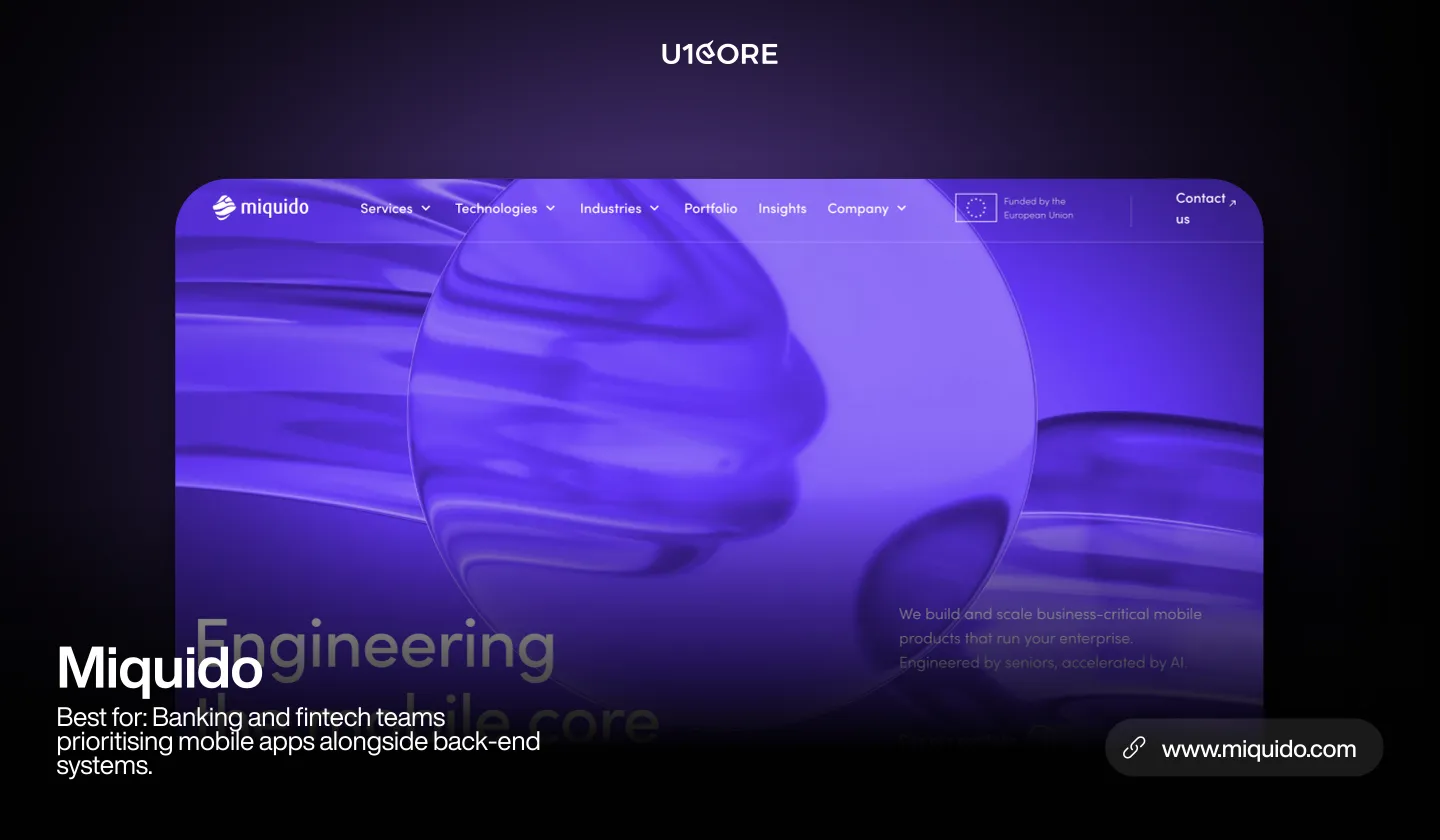
6. Miquido
Best for: Banking and fintech teams prioritising mobile apps alongside back-end systems.
Miquido is a Kraków-based software company building mobile and web products, with fintech among its core industries.
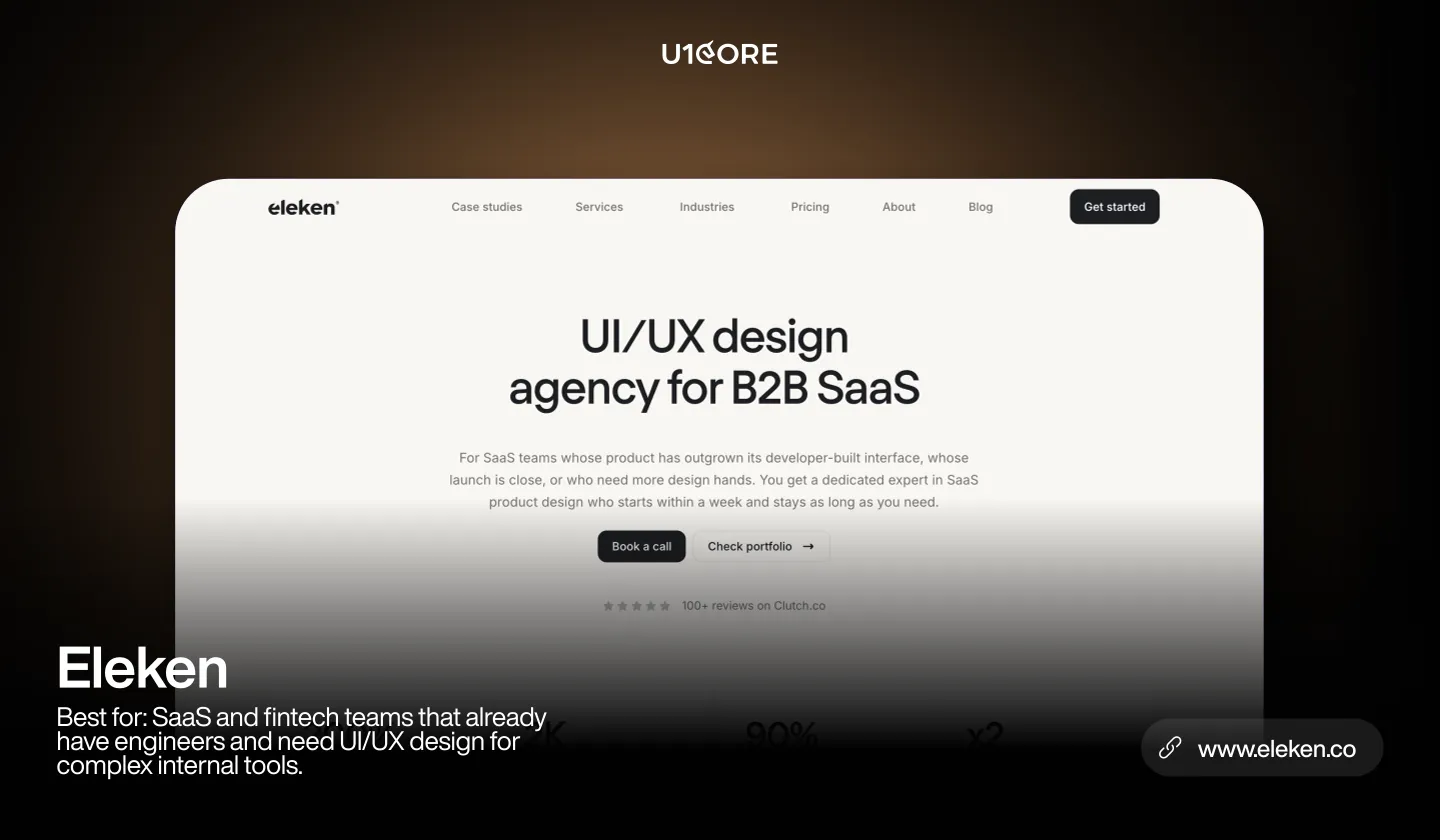
7. Eleken
Best for: SaaS and fintech teams that already have engineers and need UI/UX design for complex internal tools.
Eleken is a Ukraine-based, design-only SaaS UI/UX agency, so development stays with your in-house team.
Agency comparison at a glance
U1CORE — strategy, UX/UI and development of compliance automation and trust-building UX. Best fit for established banking products that want one team to own the full build.
Goodface — fintech design and development practice. Best fit for fintech companies wanting a sector-focused design-led partner.
Flatstudio — product design and engineering for regulated finance. Best fit for neobanks and trading products focused on compliance UX.
Netguru — large-scale software development and consulting. Best fit for bigger organisations needing broad delivery capacity.
10Clouds — fintech software engineering with design. Best fit for engineering-heavy fintech builds.
Miquido — mobile and web product development. Best fit for mobile-first banking products.
Eleken — UI/UX design for SaaS. Best fit for teams with in-house developers who need back-office design.
How U1CORE approaches compliance automation
1. Discovery and workflow mapping (2–4 weeks). We interview compliance and support staff, map how cases flow today, and quantify where time and errors accumulate.
2. Scope and architecture (1–2 weeks). We define which checks to automate first, how vendors connect, what the rules engine needs and how audit data is stored and exported.
3. UX/UI design (3–6 weeks). We design case management, ops dashboards and admin controls alongside customer-facing verification and messaging flows, tested with real users and analysts.
4. Development and integration (8–16 weeks). We build the orchestration layer, integrate KYC, screening and monitoring providers, implement configurable rules and decision logging, and release in stages.
5. Measure and iterate (ongoing). We track case resolution time, false-positive rates, verification completion and support volume, then refine rules and interfaces.
Are manual compliance checks slowing your team down and making users doubt your product? U1CORE is the partner in crime for strong businesses whose digital and operations don't yet play at their level. We'll design and build the compliance automation, ops tooling and customer experience your fintech product needs to scale with confidence. Book a strategy call or explore our Banking & Compliance Automation service.