


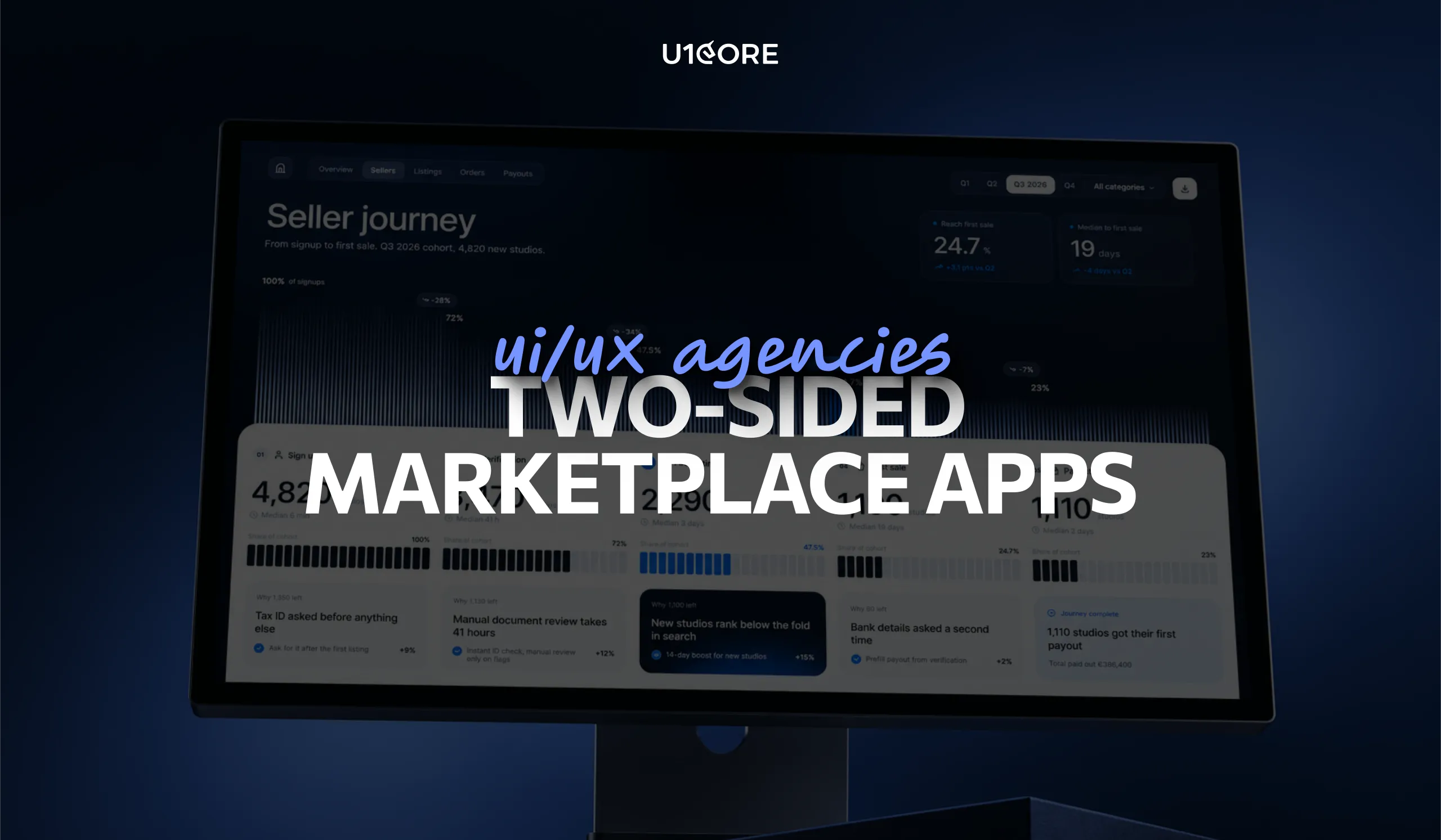
A two-sided marketplace must win two audiences at once: suppliers abandon document-heavy sign-ups, buyers bounce on irrelevant search, and operators live in spreadsheets.
This guide covers what a marketplace-focused agency fixes, how to choose one and who to consider. At U1CORE we design and build marketplaces through our Marketplace App and System service — so we'll show how we approach it.
Why two-sided marketplaces are hard to get right
Every screen serves two parties with different goals. Buyers want speed and confidence; suppliers want qualified demand and predictable payouts. A flow that suits one side often creates friction for the other.
Liquidity depends on onboarding, not marketing. Traffic means little if suppliers stall at registration or buyers never reach a relevant listing.
Trust has to be built between strangers. Verification, reviews, clear profiles and dispute handling decide whether the first transaction happens, and whether there is a second.
The operator is a third user nobody designs for. A team approves suppliers, moderates content and handles refunds. When their tools are an afterthought, the business cannot scale without hiring.
Typical failure points we see:
- One onboarding flow for both sides. Buyers and suppliers are pushed through the same steps, so neither gets what they need quickly.
- Verification as a wall. Suppliers are asked for every document upfront, before they understand why the platform is worth it.
- Payments bolted on late. Commission, escrow, split payouts and refunds are added after the core flows, creating confusing states for both sides.
- No operator console. Moderation, approvals and disputes happen in email and database tools, which slows the whole marketplace down.

What a marketplace-focused agency actually fixes
It designs separate journeys for supply and demand. Each side gets an onboarding path built around its own first success: a supplier publishing a listing, a buyer finding a relevant match.
It turns verification into a trust feature. Good marketplace UX stages verification, explains each step and shows verified status as a visible benefit. For business-to-business platforms, our B2B Marketplace article explains how verification and approval chains differ from consumer marketplaces.
It makes search and matching do the selling. Filters, ranking, request-for-quote flows and recommendations are designed around how buyers actually decide.
It designs payments as part of the transaction. Checkout, commission, deposits, escrow, payouts and refunds are mapped as one flow with clear states for buyer, supplier and operator.
It gives operators real tools. Admin dashboards for approvals, moderation, disputes and payouts are designed alongside the user-facing product.
How to choose an agency for a two-sided marketplace
Ask to see both sides of a past marketplace. A strong portfolio shows the buyer app, the supplier app and the admin console, not only a polished landing page.
Check how they handle verification and trust. Ask how they reduced drop-off during supplier onboarding and how verified status is presented to buyers.
Look for transaction and payment experience. Split payouts, escrow and refunds create edge cases the agency should be able to walk you through.
Prefer a team that also builds. Matching logic, payment integrations and role permissions are best decided by design and development together.
Confirm they design for operators. If the proposal does not mention admin tools, moderation or reporting, the back office will become your problem after launch.
Top 6 agencies for two-sided marketplace app design
1. U1CORE
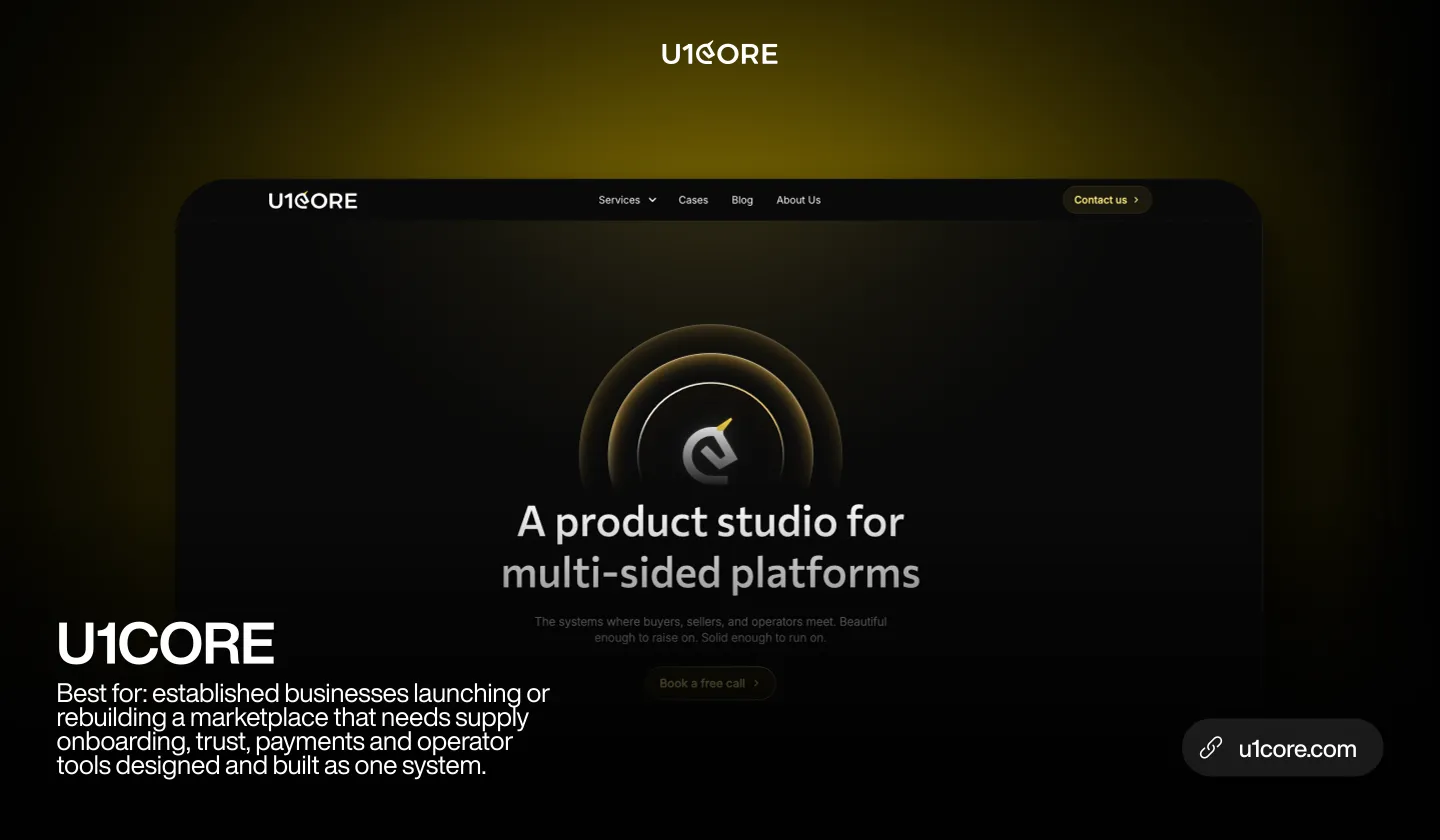
Best for: established businesses launching or rebuilding a marketplace that needs supply onboarding, trust, payments and operator tools designed and built as one system.
U1CORE is one team for branding, product strategy, UX/UI design and development, working with strong businesses whose digital and operations don't yet play at their level. Over $1B has been processed through platforms U1CORE has built. On the LeaseLinking marketplace project, the redesigned flows delivered +35% registration conversion and 95% verified profiles. Teams work across Tallinn, London, Madrid, Warsaw, Dubai, New York and San Francisco, backed by 52 reviews on Clutch, 103 on Upwork, 37 on GoodFirms and 31 on DesignRush.
What U1CORE does on marketplace projects:
- Product Strategy — marketplace model, supply and demand priorities, monetisation and a phased roadmap.
- UX Audit — finding where suppliers and buyers drop off in an existing platform.
- UI/UX Design — separate buyer and supplier journeys, staged verification, search and matching, checkout and payouts.
- Custom Software Development — marketplace logic, role permissions, payment integrations and operator consoles.
- Branding — a brand both sides of the market recognise and trust.
Why teams choose U1CORE: buyer apps, supplier apps and admin tools are designed and built by one team, so trust, payments and operations work as one system from day one.
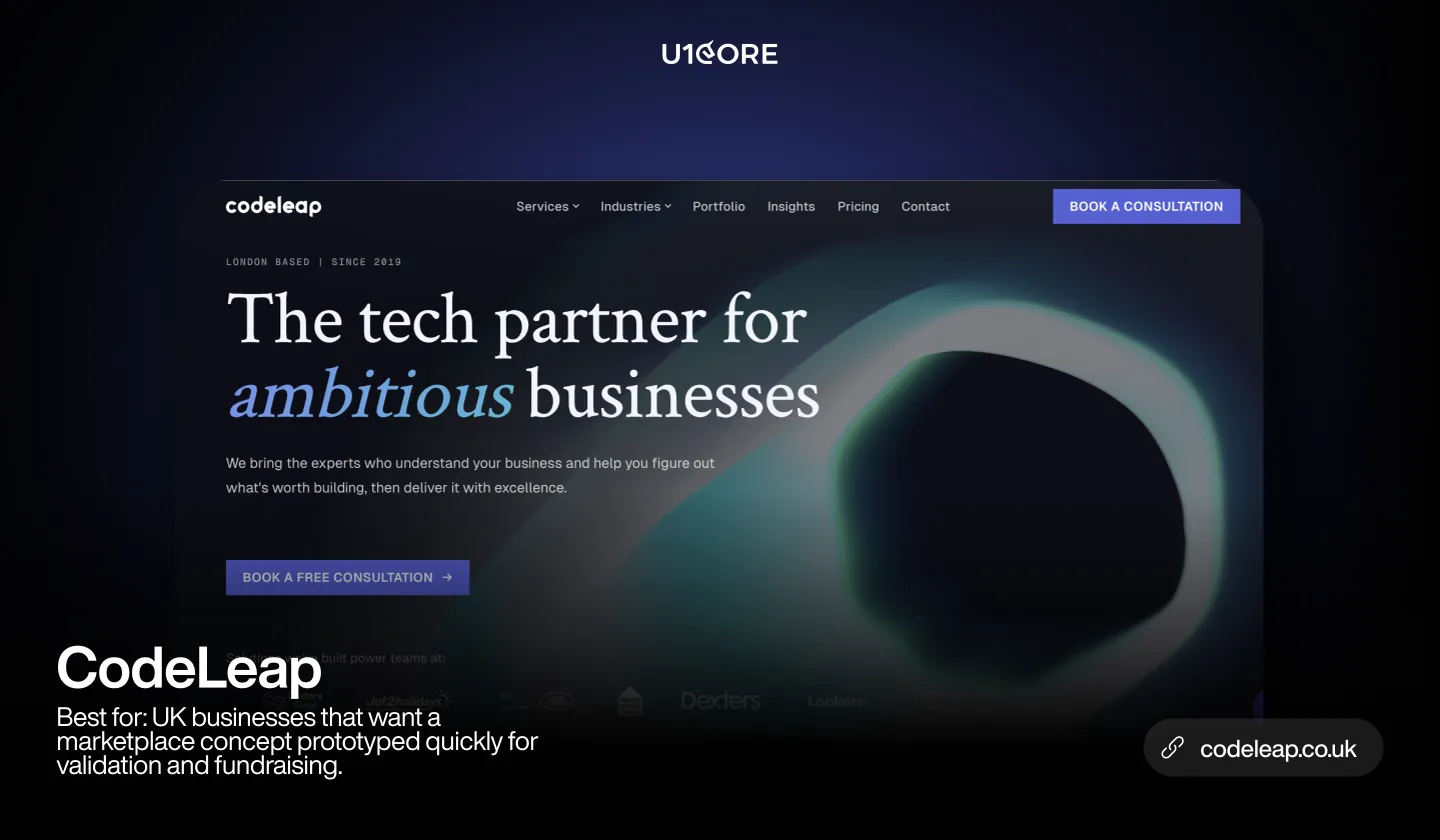
2. CodeLeap
Best for: UK businesses that want a marketplace concept prototyped quickly for validation and fundraising.
CodeLeap offers product strategy, design and development, with published work on both sides of a home-improvement marketplace.
3. Codica
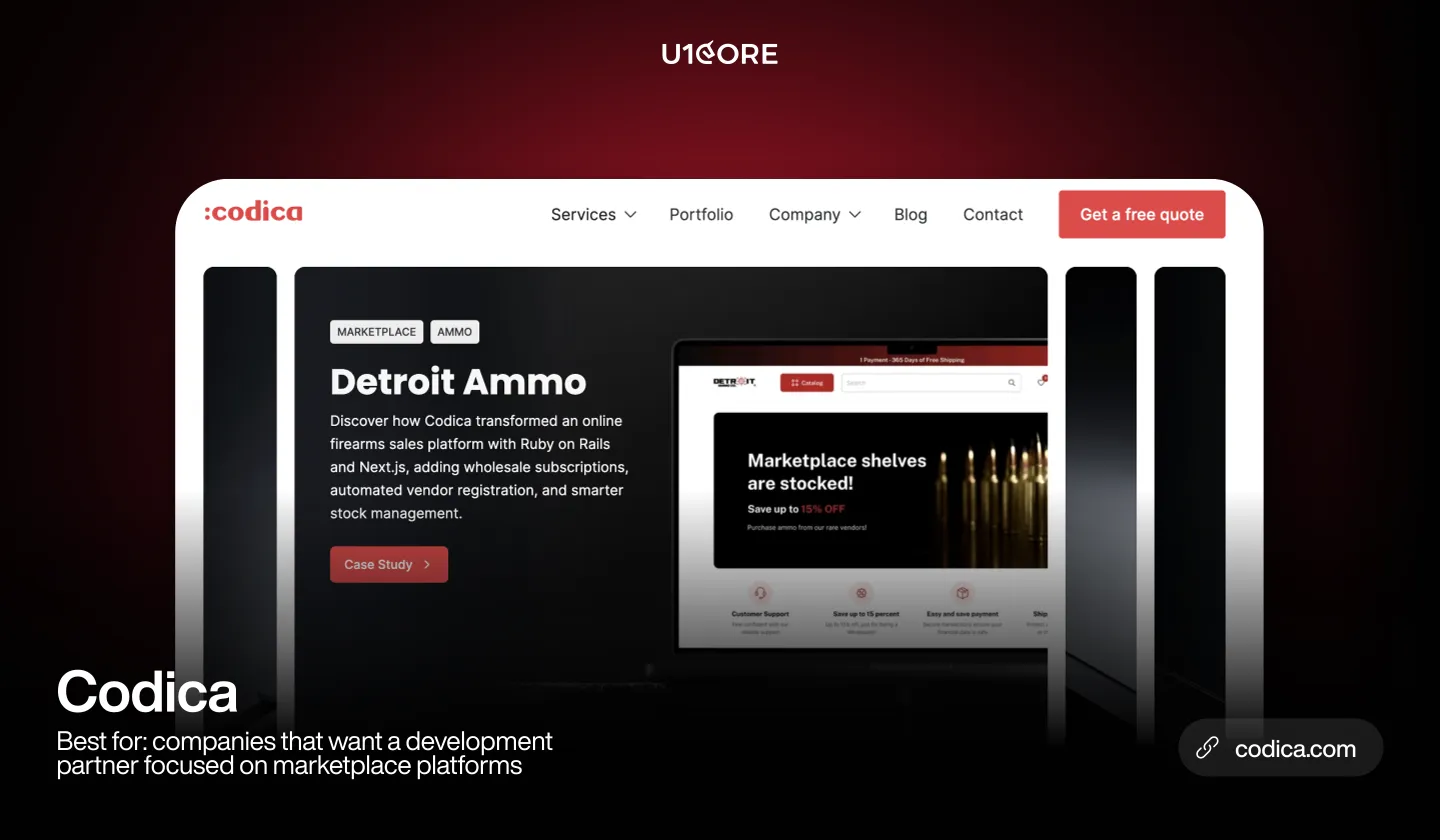
Best for: companies that want a development partner focused on marketplace platforms.
Codica builds online marketplaces and SaaS products with in-house design and development.
4. Netguru
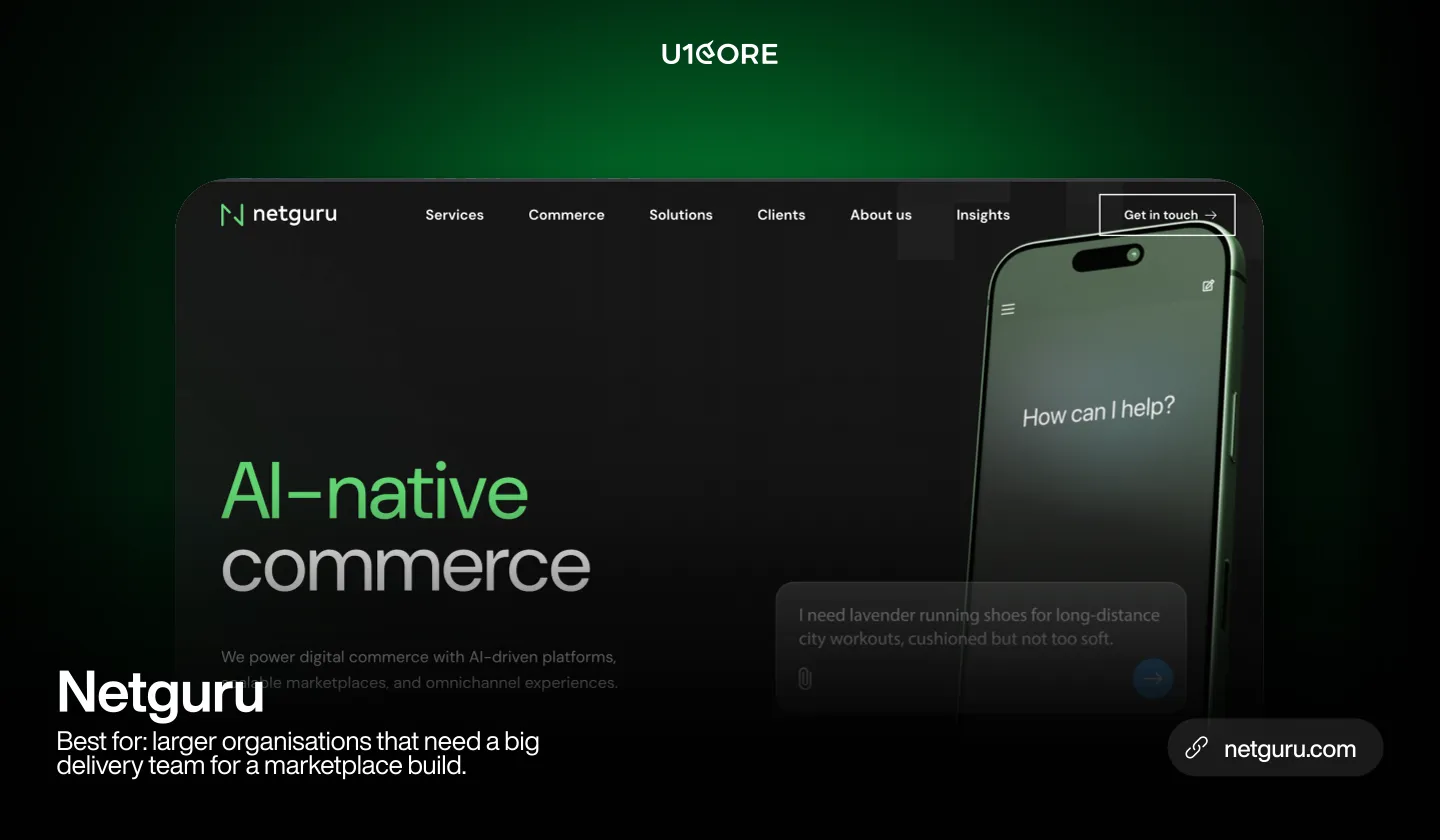
Best for: larger organisations that need a big delivery team for a marketplace build.
Netguru is a Poland-based consultancy offering product design and development, including marketplaces.
5. Uptech
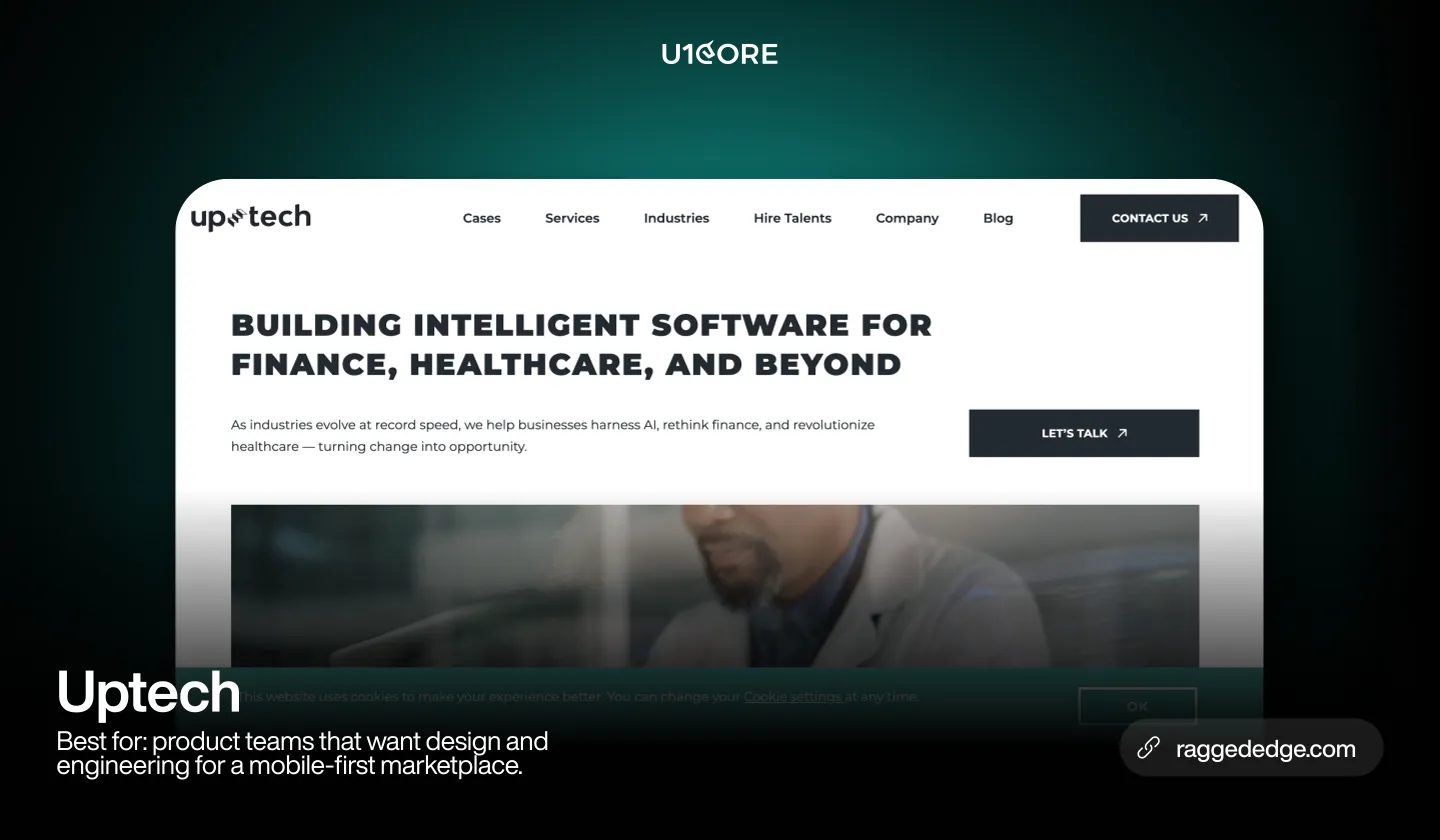
Best for: product teams that want design and engineering for a mobile-first marketplace.
Uptech provides UX/UI design and mobile and web development, including marketplace apps.
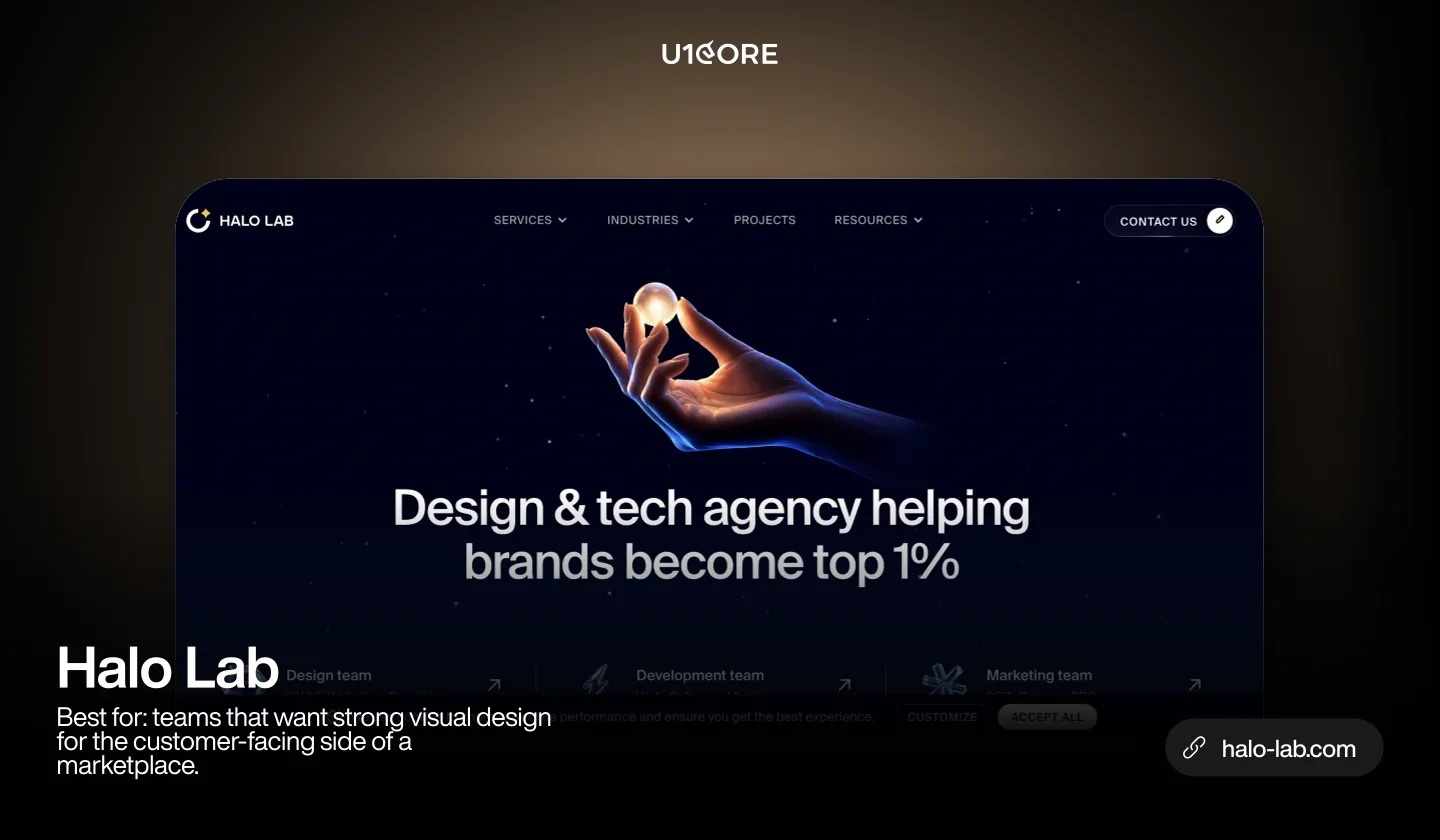
6. Halo Lab
Best for: teams that want strong visual design for the customer-facing side of a marketplace.
Halo Lab is a design and development agency known for web and product design.
Agency comparison at a glance
U1CORE — marketplace strategy, design, development and operator tools in one team. Best fit for established businesses that need both sides and the back office built as one system.
CodeLeap — fast marketplace UX and prototypes. Best fit for UK businesses validating a concept.
Codica — marketplace-focused development. Best fit for companies prioritising the build.
Netguru — large-scale product delivery. Best fit for organisations needing a big team.
Uptech — mobile-first product design and engineering. Best fit for app-led marketplaces.
Halo Lab — visual and web design. Best fit for polishing the customer-facing experience.
How U1CORE approaches a two-sided marketplace
1. Marketplace model and discovery (1–3 weeks). We interview buyers, suppliers and the operations team, map the transaction from first visit to payout, and agree which side to prioritise for liquidity.
2. Supply and demand journeys (2–4 weeks). We design separate onboarding for each side, staged verification, profiles, search, matching and request flows, and test them as clickable prototypes.
3. Transactions and trust (1–3 weeks). We design checkout, commission, deposits, payouts, refunds, reviews and dispute handling, with clear states for every party.
4. Operator console. We design the admin side: supplier approvals, moderation, disputes, payouts, and reporting on marketplace health, with role-based permissions for the operations team.
5. Build, launch and iterate. Our developers build the platform on a design system, connect payments and integrations, and we track registration, verification and transaction rates after launch to improve the weakest step.

Are your suppliers dropping off before your buyers ever see them? U1CORE is the partner in crime for strong businesses whose digital and operations don't yet play at their level. We'll design and build both sides of your marketplace, and the tools your team needs to run it. Book a strategy call or explore our Marketplace App and System service.